
 Save
Save This loaf blends crunchy walnuts into a hearty, rustic bread with a subtly sweet, nutty aroma. The dough is kneaded until smooth and rises twice for a perfect texture. Baking yields a golden crust with a hollow sound when tapped, indicating a well-baked interior. Ideal for breakfast or paired with cheeses and charcuterie, it brings warmth and flavor to any meal. Toast walnuts beforehand to enhance the nutty depth or substitute whole wheat flour for added heartiness. Enjoy fresh or freeze slices for later use.
I still remember the first time I pulled a loaf of walnut bread from the oven—the aroma alone had my entire kitchen wrapped in this warm, nutty embrace that made me forget about everything else. It was a lazy Sunday morning, and I'd decided to bake something that felt less like following a recipe and more like creating an edible hug. That bread became my anchor, the thing I'd return to again and again whenever I needed to feel grounded in my kitchen.
I'll never forget the day my neighbor spotted this loaf cooling on my windowsill and literally came to my door asking what I was cooking. We spent the next hour talking over thick slices spread with soft cheese and honey—that bread became the bridge that turned an acquaintance into a real friend. Food has this magic, doesn't it?
Ingredients
- Bread flour (3 ½ cups): The backbone of everything—it develops the structure that gives you that satisfying chew. I learned the hard way that measuring by weight is more reliable than cups, but either works if you're careful and level it off
- Active dry yeast (1 packet): Make sure this is fresh and your water is warm but not hot—it's the invisible magician that transforms flat dough into something airy and alive
- Fine sea salt (1 ½ teaspoons): Don't skip this or use too much; salt is what brings out the flavor and controls how fast the yeast works
- Brown sugar (2 tablespoons): Feeds the yeast and adds a subtle sweetness that makes the walnut flavor pop even more
- Warm water (1 ¼ cups): Between 105 and 110°F is the sweet spot—too cold and nothing happens, too hot and you'll kill your yeast
- Olive oil (2 tablespoons): This adds moisture and richness; it's the difference between bread that's a little dry and bread that's actually luxurious
- Walnuts, roughly chopped (1 ½ cups): Toast them first if you have time—it wakes up their flavor and makes the whole loaf taste more intentional and deep
Instructions
- Create your foundation:
- In a large bowl, whisk together the flour, yeast, salt, and brown sugar. Take your time with this—you're not just mixing, you're distributing the yeast evenly so your dough rises predictably. I like to use a whisk because it breaks up any clumps in the flour
- Bring it together:
- Make a well in the center of your dry ingredients like you're creating a little volcano. Pour in your warm water and olive oil, then grab a wooden spoon and start pulling the flour from the edges into the center. It'll look messy and shaggy—that's perfect. Don't worry about it being smooth yet
- Knead until smooth:
- Lightly flour your counter and turn the dough out. Knead for about 8 to 10 minutes—push the dough away from you with the heel of your hand, fold it back, rotate it, and repeat. You'll feel it transform under your hands from rough and sticky to smooth and elastic. This is where the magic starts
- Fold in the walnuts:
- Once your dough is smooth, gradually knead in the chopped walnuts, working them in slowly so they distribute evenly. Some will break apart—that's fine. You're looking for them to be woven throughout, not clumped in one area
- First rise:
- Place your dough in a lightly oiled bowl, cover it with a damp kitchen towel or plastic wrap, and tuck it somewhere warm—the top of your fridge, a turned-off oven, or even a sunny spot on your kitchen counter works. Let it rise for 1 to 1.5 hours until it's roughly doubled in size. You'll know it's ready when you poke it and the indent springs back slowly
- Shape your loaf:
- Punch down the dough gently—not aggressively, just enough to release some gas. Turn it onto an unfloured surface and shape it into a round or oval loaf depending on what you're baking it in. If using a baking sheet, go round; if using a loaf pan, shape it into an oval that fits snugly
- Second rise:
- Place your shaped dough on a parchment-lined baking sheet or in a greased loaf pan. Cover it again and let it rise for 30 to 40 minutes until it's puffy and springs back slowly when poked. This is when your oven should start preheating to 400°F
- Score with intention:
- Using a sharp knife (a bread lame or box cutter works beautifully too), make a few diagonal slashes across the top of your loaf. This helps it expand evenly as it bakes and creates those gorgeous dark lines on the crust
- Bake until golden:
- Slide your loaf into the hot oven and bake for 30 to 35 minutes. You're looking for a golden-brown crust that sounds hollow when you tap it on the bottom. If it's browning too fast, you can tent it loosely with foil
- Cool and admire:
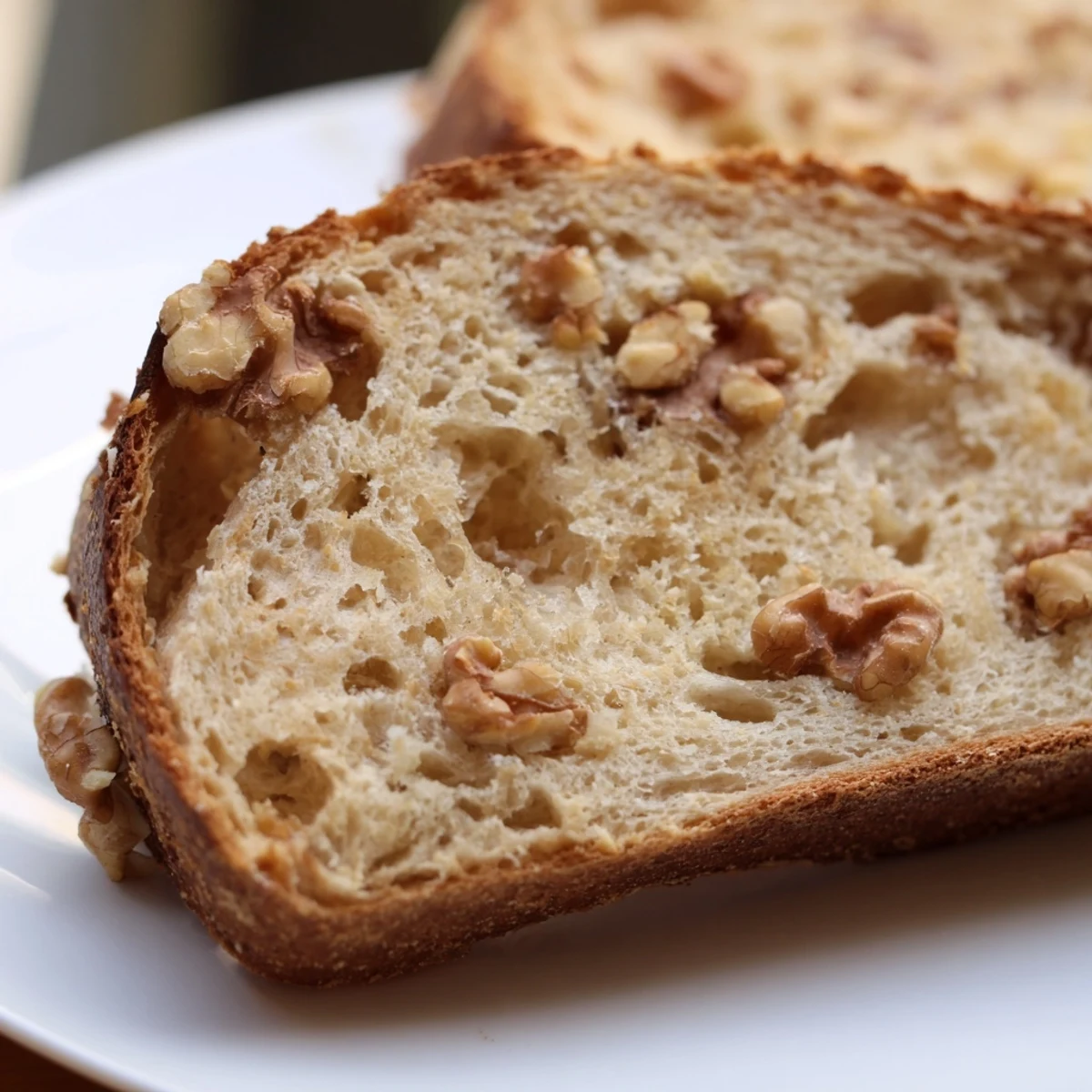
- Transfer your bread to a wire rack and let it cool completely before slicing—I know this is hard, but slicing into warm bread tears it apart. Patience here means you get clean, beautiful slices
 Save
Save There's a moment during the second rise when you walk past your dough and realize you've created something from scratch—that small shift from ingredients to potential always fills me with quiet joy. By the time that bread comes out of the oven, you're not just baking anymore; you're making memories.
The Walnut Advantage
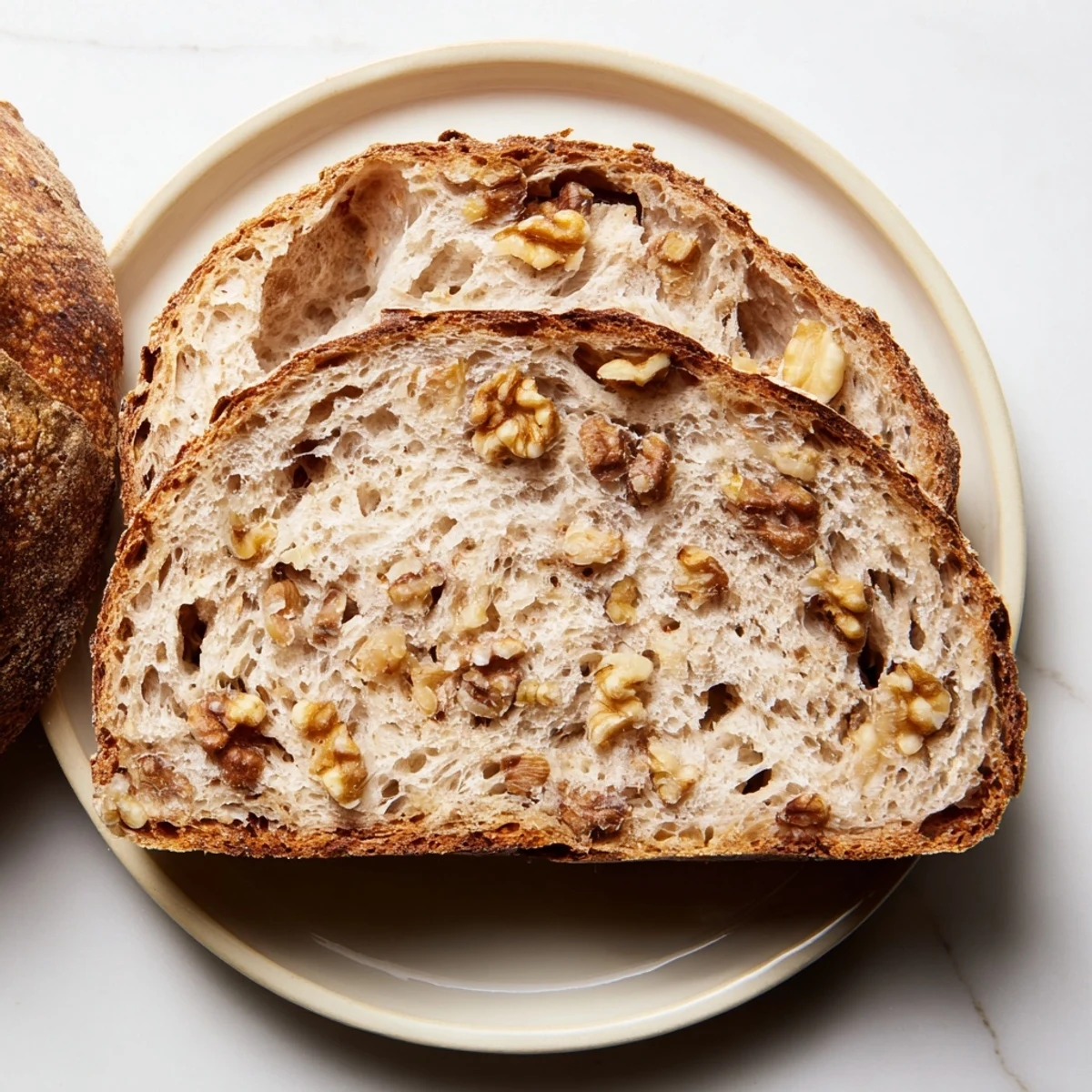
Walnuts aren't just add-ins here—they're personality. They bring an earthy depth that transforms this from plain bread into something you crave. Every bite is different because the nuts are scattered throughout, so sometimes you get a cluster and sometimes just a hint. If you find yourself gravitating toward certain bites more than others, you've discovered your own walnut ratio preference, and that's half the fun of making bread.
Pairing and Serving
I've learned through happy accidents that this bread is a chameleon. Serve it warm with soft butter for simple mornings, or let it cool and pair it with sharp blue cheese and honey for something elegant enough to impress. It's also incredible toasted the next day, which means this recipe keeps giving long after you bake it. The crust stays crispy on the outside while the inside remains soft and tender.
Storing and Extending the Joy
This bread stays fresh at room temperature for two or three days if you keep it in a paper bag—the paper lets it breathe so the crust stays crispy. I've found that slicing and freezing individual pieces means you can toast one whenever the craving strikes, and the bread tastes nearly as good as fresh. It's like giving your future self a gift.
- Wrap cooled bread in plastic wrap before freezing to prevent freezer burn and keep it fresh for up to three months
- Toast frozen slices directly from the freezer for a quick breakfast with that just-baked quality
- The crust may soften after a day—store in an airtight container if you prefer softer crust, or keep in a paper bag for a crispier texture
 Save
Save Baking this walnut bread is less about following instructions and more about learning to trust your hands and your senses. Each time you make it, you'll notice something new, and that's the real gift of homemade bread.
Questions & Answers
- → How can I enhance the walnut flavor?
-
Lightly toasting the walnuts before mixing them into the dough intensifies their nutty aroma and adds depth to the bread's flavor.
- → What is the best flour to use for this loaf?
-
Bread flour works well for structure and chewiness, but replacing half with whole wheat flour creates a heartier texture and richer taste.
- → How do I know when the bread is fully baked?
-
When the crust turns golden brown and the loaf sounds hollow when tapped on the bottom, the bread is perfectly baked.
- → Can I prepare the dough in advance?
-
Yes, after the first rise, the dough can be refrigerated overnight to develop flavor and baked the next day.
- → What are good accompaniments for this bread?
-
This bread pairs beautifully with blue or goat cheeses, honey, and charcuterie, enhancing its rustic and nutty profile.