
 Save
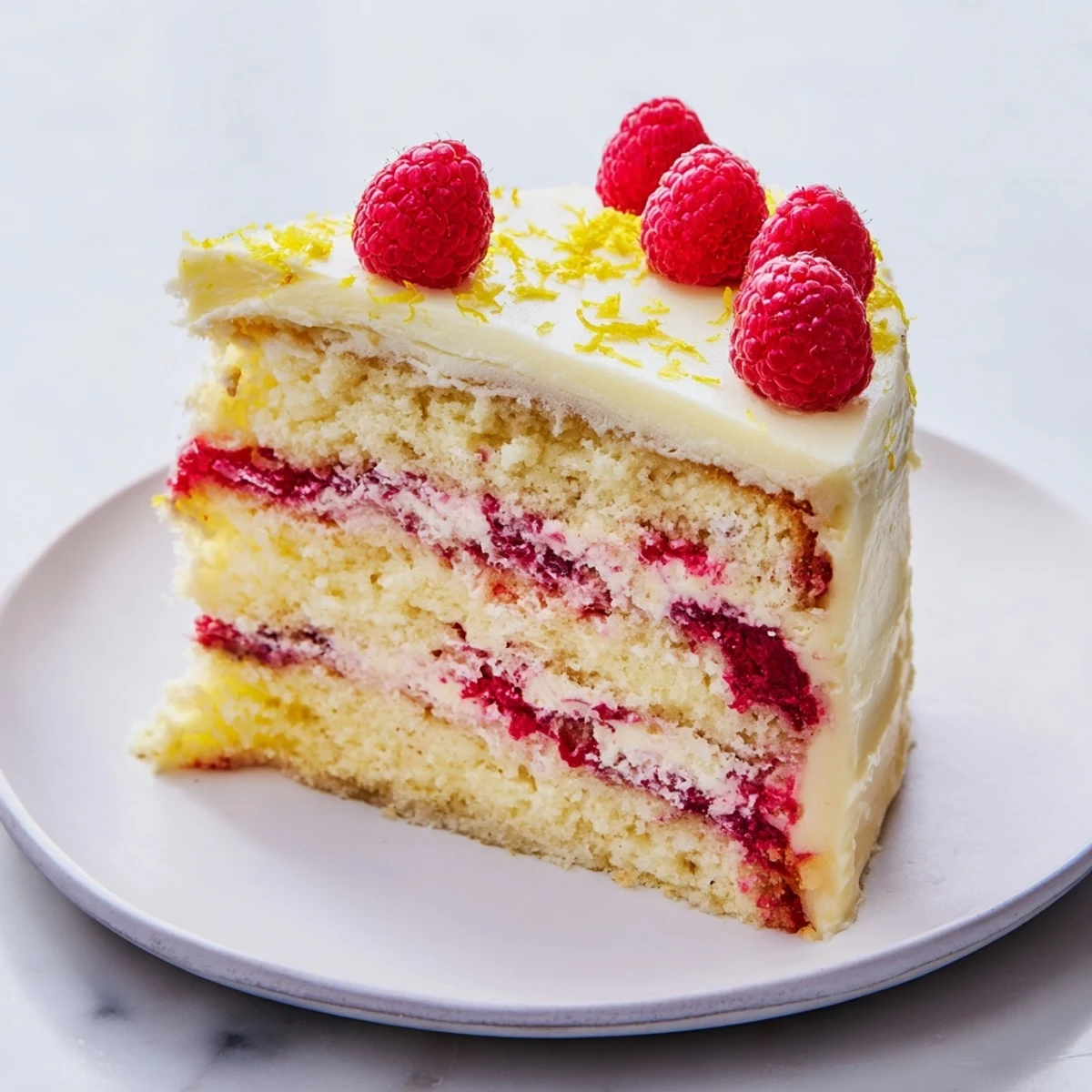
Save Bake three moist lemon sponge rounds until golden. Simmer raspberries with sugar and cornstarch to create a thick, fruity filling. Whip butter with sugar and zest for a tangy buttercream. Stack the cakes with the jam and frosting, then coat the entire dessert. Decorate with fresh berries and zest before chilling briefly for clean slices.
My neighbor brought this cake to a garden party last June, and I watched people come back for seconds without hesitation—something about the brightness of lemon paired with those tart raspberries just made everyone pause and smile. I spent the next week pestering her for the recipe, and when she finally handed it over, I realized why she guarded it so carefully: it's the kind of cake that tastes like you've been baking all your life. The layers are tender, the filling isn't overly sweet, and that buttercream has just enough lemon zest to make your mouth tingle slightly. I've made it seven times since, and each time the kitchen smells like a citrus grove in the best possible way.
The first time I made this for my book club, I was nervous about the three pans—I'd never tackled a triple-layer cake before—but watching everyone taste that first bite and their eyes light up made all the careful assembly worthwhile. One friend even asked if I'd opened a bakery. I didn't tell her I'd burned the edges of the first test batch; I just smiled and enjoyed the moment.
Ingredients
- All-purpose flour: Use a light hand when measuring; scoop and level rather than packing, or weigh it if you have a scale—dense cakes come from flour being too compacted.
- Baking powder and baking soda: Check the expiration dates, because old leavening agents won't give you that tender crumb you're after.
- Unsalted butter: Room temperature is non-negotiable here; cold butter won't cream properly with the sugar, and your cake will be dense.
- Granulated sugar: This creates structure and helps the cake rise evenly through the oven's heat.
- Eggs: Room temperature eggs incorporate smoothly into the batter, creating a silky base for those layers.
- Fresh lemon zest: Microplane it directly over the bowl while beating—the oils release into the batter and give it a fragrant punch you can't get from bottled zest.
- Fresh lemon juice: Squeeze it yourself right before mixing; bottled juice tastes a bit flat and doesn't brighten the cake the same way.
- Vanilla extract: This balances the tartness and deepens the vanilla notes in the background.
- Whole milk: Room temperature milk mixes smoothly without shocking the warm batter.
- Fresh raspberries: Handle them gently; they bruise easily and you want whole berries for the filling.
- Lemon buttercream ingredients: The butter must be soft enough that your finger leaves a dent, and the powdered sugar needs sifting to prevent lumps that catch between your teeth.
Instructions
- Prep your pans and heat your oven:
- Grease three 8-inch round pans with butter or baking spray, then line the bottoms with parchment paper circles—this small step saves you heartbreak when turning out warm cakes. Set your oven to 350°F and let it preheat fully so the cakes rise evenly.
- Whisk the dry ingredients:
- Combine flour, baking powder, baking soda, and salt in a medium bowl and whisk for about a minute—this distributes the leavening evenly throughout. Set aside and don't skip this step; it's the difference between a lumpy cake and a smooth one.
- Cream the butter and sugar:
- Beat softened butter with granulated sugar for 3 to 4 minutes until the mixture looks pale and fluffy, like fluffy clouds. This aeration creates tiny pockets that let the cake rise beautifully in the oven.
- Add eggs one at a time:
- Crack each egg into a small bowl first so no shells sneak in, then add to the butter mixture and beat well after each addition. The batter should look smooth and emulsified, not curdled or separated.
- Mix in the lemon flavors:
- Stir in the lemon zest, fresh lemon juice, and vanilla extract, scraping down the sides of the bowl so everything combines evenly. The batter will look slightly curdled; that's normal and it will come together in the next step.
- Alternate flour and milk:
- Add one-third of the flour mixture, beat until just combined, then add one-third of the milk, and repeat twice more, ending with flour. Overmixing at this stage develops gluten and makes the cake tough, so stop as soon as you don't see dry flour.
- Divide and bake:
- Pour the batter evenly among the three prepared pans (a kitchen scale helps here) and smooth the tops gently. Bake for 25 to 30 minutes until a toothpick inserted in the center comes out clean with just a few moist crumbs.
- Cool with patience:
- Let the cakes rest in the pans for 10 minutes—they firm up enough to release without breaking—then turn them out onto wire racks to cool completely. Don't assemble until they're truly cool, or the buttercream will melt.
- Make the raspberry filling:
- Combine fresh raspberries, sugar, and lemon juice in a small saucepan and cook over medium heat, stirring occasionally, until the berries break down into a jammy sauce, about 5 minutes. Stir in the cornstarch slurry and simmer for another minute until the filling thickens; you want it thick enough to hold between layers without squishing out.
- Prepare the buttercream:
- Beat room-temperature butter until creamy, then gradually add sifted powdered sugar a little at a time, scraping the bowl often. Add lemon juice, lemon zest, and salt, then add cream 1 tablespoon at a time until you reach a spreadable consistency that's fluffy and holds its shape.
- Build the layers:
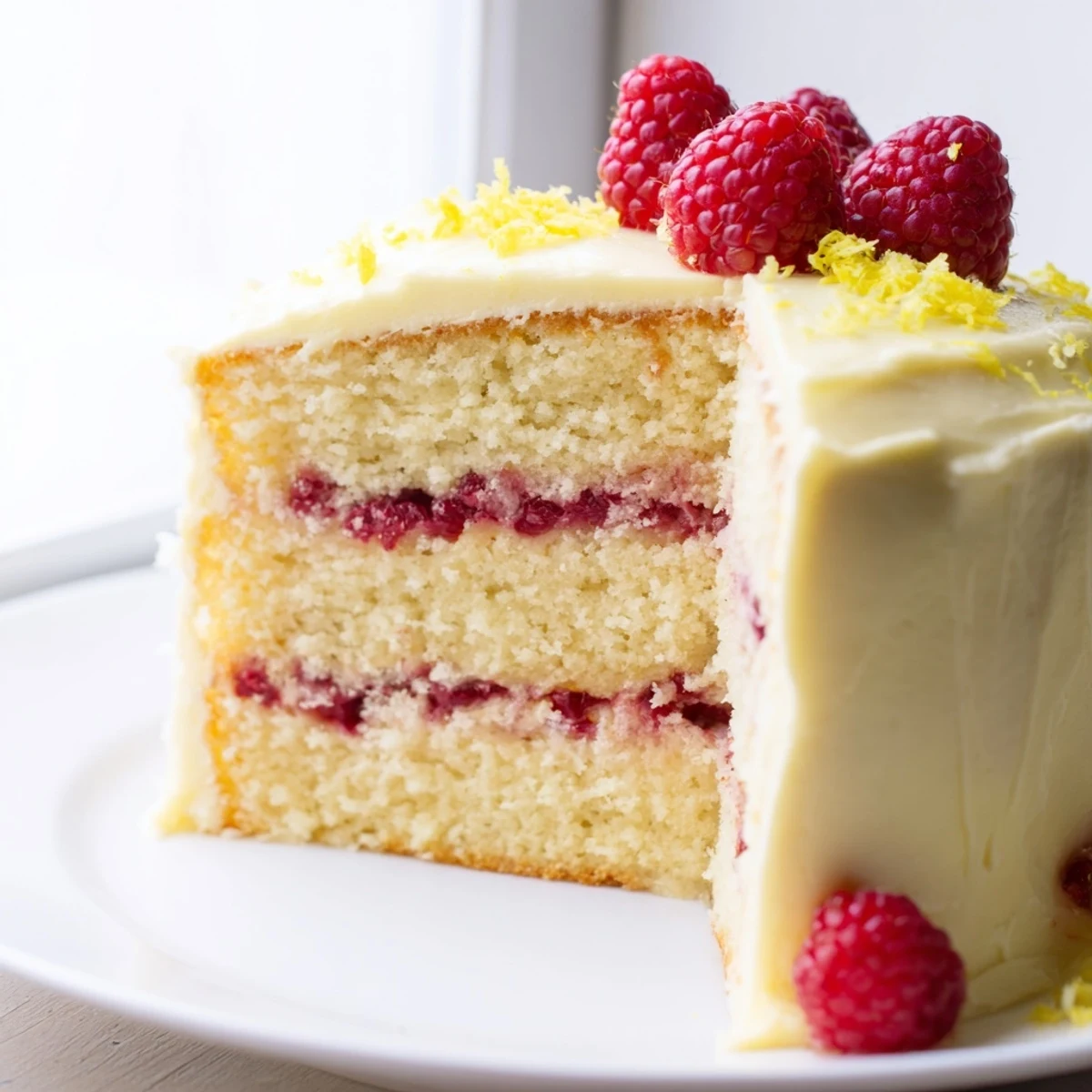
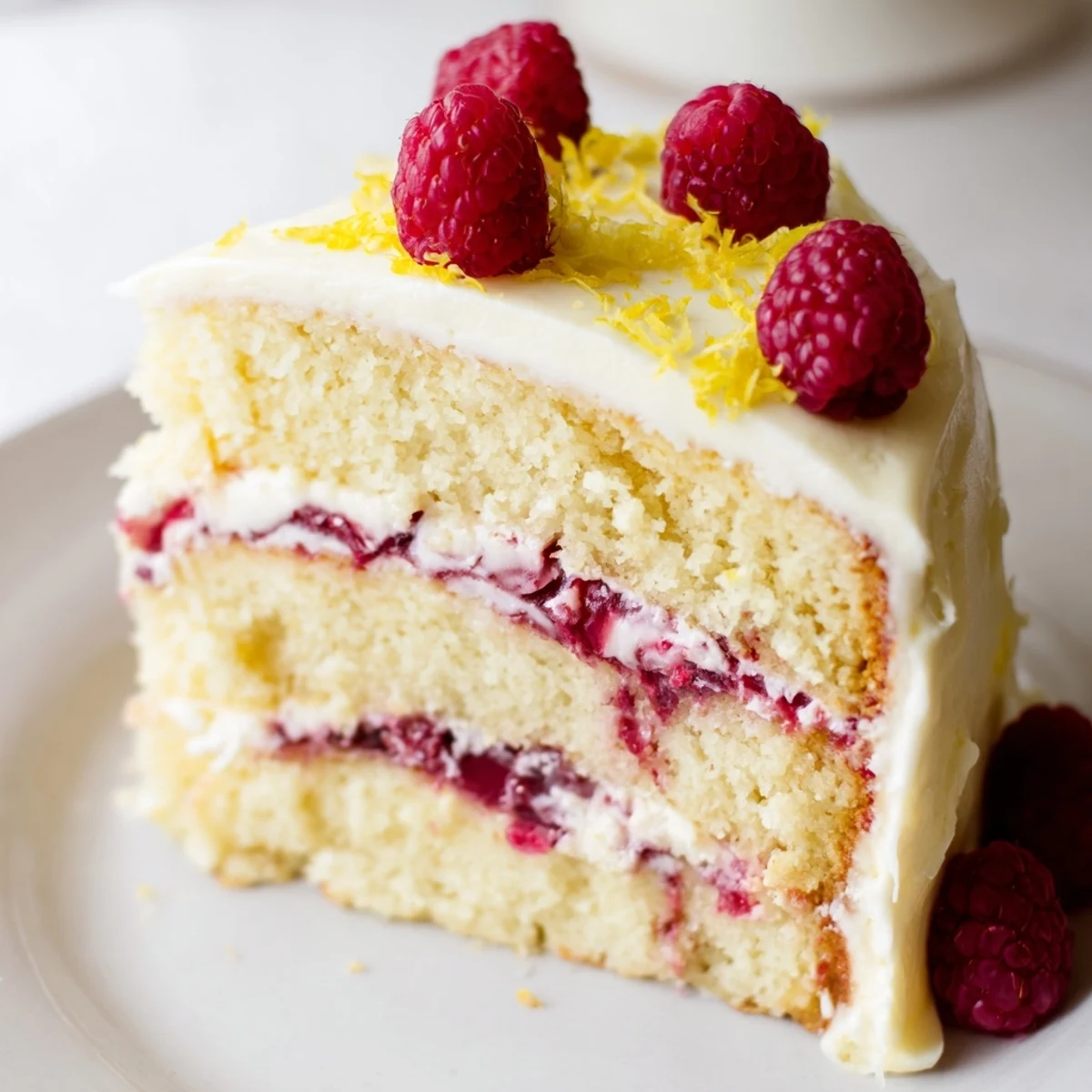
- Place the first cake layer on your serving plate, spread half the cooled raspberry filling across it leaving a half-inch border (this prevents squishing), then add a thin layer of buttercream. Set down the second layer and repeat, then crown it all with the final layer.
- Frost and finish:
- Cover the top and sides with the remaining buttercream, smoothing it with an offset spatula or a bench scraper for a polished look. Arrange fresh raspberries on top and add lemon slices or zest if you like, then chill for at least 30 minutes so the layers set and slicing becomes clean instead of messy.
 Save
Save There's something magical about watching someone's face when they taste this cake and realize it's homemade—the disbelief that you made all three layers from scratch never gets old. This cake has become my go-to when I want to show someone I care without saying a word.
Timing and Make-Ahead Strategy
You can bake the cake layers a day ahead and store them wrapped in plastic wrap at room temperature, which actually gives you breathing room on the day you need to serve it. The raspberry filling also keeps in the fridge for two days, so if you prep that in advance, assembly becomes a calm fifteen-minute project instead of a frantic scramble. The buttercream is best made fresh, but it holds for a few hours at room temperature if your kitchen isn't too warm.
Flavor Variations That Work
I've experimented with brushing the cooled cake layers with a simple lemon syrup (equal parts lemon juice and sugar, heated until the sugar dissolves) before assembling, and it deepens the lemon flavor so much that it almost feels like a different cake. You can also swap the raspberries for blackberries if you're making this in late summer and fresh raspberries are wilted or expensive. Some friends have asked about using frozen raspberries, and yes, they work fine as long as you thaw and drain them completely so you don't end up with a soggy cake.
Serving and Storage Tips
Slice this cake with a sharp, long knife dipped in hot water and wiped clean between cuts—that hot knife trick sounds fancy but it genuinely prevents the layers from compressing or smudging. The cake keeps in an airtight container in the fridge for up to three days, and it tastes even better on day two when all the flavors have settled into each other. If you want to go elegant, serve it with a glass of sparkling wine or a proper cup of Earl Grey tea—the tartness and aroma pair beautifully.
- A cake server or wide spatula makes plating each slice feel effortless and keeps it looking pristine.
- Let slices sit at room temperature for fifteen minutes before serving if they've been refrigerated, so the buttercream softens slightly and the flavors aren't muted by cold.
- You can make this cake up to a day before serving, which makes it perfect for entertaining when you'd rather not be baking the morning of your event.
 Save
Save This cake feels like stepping into a sunny afternoon no matter what the weather is doing outside. Make it once and it'll become part of your celebration repertoire forever.
Questions & Answers
- → Can I use frozen raspberries?
-
Yes, thaw and drain them thoroughly before cooking to prevent the filling from becoming too watery.
- → How should I store this cake?
-
Keep it refrigerated in an airtight container. It tastes best when served at room temperature, so let it sit out for 30 minutes before eating.
- → Is the buttercream hard to make?
-
Not at all. Beat softened butter until creamy, then gradually sift in powdered sugar and lemon juice until smooth and fluffy.
- → Can I make this ahead of time?
-
Yes, you can bake the sponge layers and make the filling a day in advance. Wrap the cakes well and store the components separately.
- → What can I serve with this?
-
It pairs wonderfully with a glass of sparkling wine or a hot cup of Earl Grey tea for a delightful afternoon treat.