
 Save
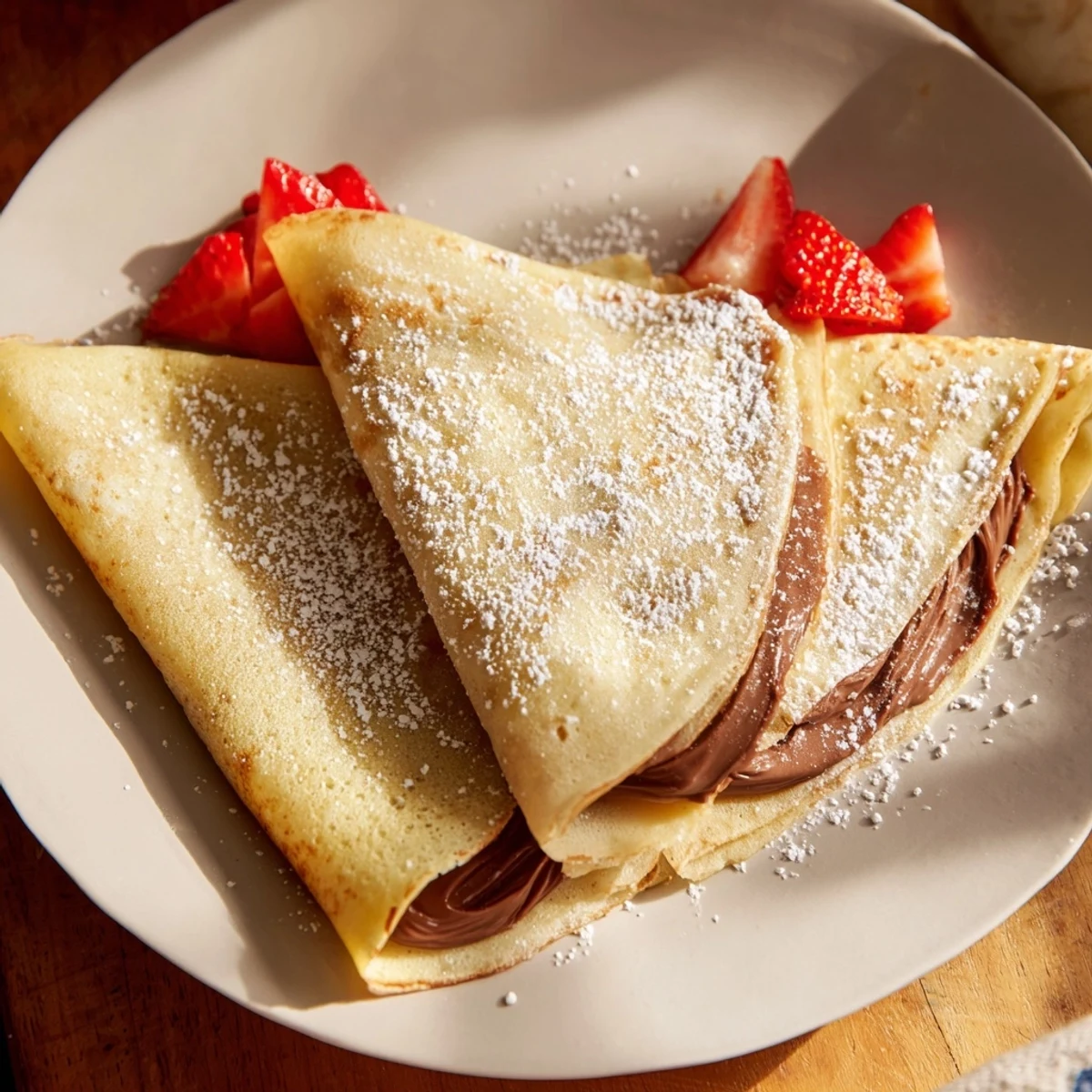
Save These thin French crepes delicately wrap a creamy Nutella filling, enhanced by a light dusting of powdered sugar. The batter blends flour, eggs, milk, melted butter, sugar, salt, and vanilla, gently cooked in a nonstick pan to a golden finish. Each crepe is layered with Nutella, folded or rolled to retain richness, and optionally garnished with fresh fruit or nuts for added texture and flavor. Ideal for a quick yet indulgent breakfast or dessert.
I still remember the morning I first attempted crepes at my friend Marie's tiny Parisian apartment. She stood beside me, gently correcting my wrist motion as I swirled the batter, and when that first delicate circle emerged golden and paper-thin, I understood why the French treat this simple recipe with such reverence. That day, filled with Nutella and dusted with powdered sugar, those crepes tasted like pure magic. Now, whenever I make them, I'm transported back to that kitchen, to the patience and care that transforms three basic ingredients into something that feels fancy enough for company but easy enough for a quiet Tuesday morning.
I'll never forget making a batch of these for my sister's surprise birthday breakfast. She came downstairs expecting scrambled eggs and toast, and instead found a stack of warm crepes, each one filled with Nutella and arranged on her plate like edible art. The look on her face—pure joy mixed with disbelief that I'd actually pulled it off—made every perfectly swirled crepe worth the effort. That's when I learned that crepes are really about showing someone they matter, wrapped up in something delicious.
Ingredients
- All-purpose flour (1 cup/125 g): This is your foundation. Don't over-measure by packing it into the cup; spoon it in gently and level it off. Too much flour makes tough, thick crepes instead of the delicate, tender ones you're after.
- Eggs (2 large): They bind everything together and give the batter structure. Room temperature eggs mix more smoothly, so pull them out of the fridge a few minutes before you start.
- Milk (1 1/4 cups/300 ml): This is what creates that signature thinness. Whole milk gives you the silkiest result, but any kind works in a pinch.
- Unsalted butter, melted (2 tbsp/30 g, plus extra for greasing): Melted butter incorporates more evenly than cold butter and creates that subtle richness. Save a small dish of it for brushing your pan between crepes.
- Granulated sugar (1 tbsp/12 g): Just enough to balance the savory flour without making the batter sweet. This lets the Nutella be the star.
- Salt (1/4 tsp): Never skip this. A tiny pinch awakens all the other flavors and prevents the crepes from tasting flat.
- Vanilla extract (1 tsp): A whisper of vanilla adds warmth and complexity that makes people wonder what your secret ingredient is.
- Nutella or chocolate-hazelnut spread (1 cup/250 g): This is where the magic lives. A generous spread—about 1 to 2 tablespoons per crepe—ensures every bite tastes luxurious.
- Powdered sugar, for dusting: A fine, snowy finish that's as much about presentation as it is about adding sweetness. Sift it right before serving so it doesn't clump.
- Optional garnishes (fresh strawberries, bananas, hazelnuts): These add contrast and freshness. Strawberries are my favorite—their tartness cuts through the richness beautifully.
Instructions
- Blend your batter base:
- In a large bowl, whisk together the flour, eggs, milk, melted butter, sugar, salt, and vanilla extract. Work until the mixture is smooth and silky—no lumps hiding at the bottom. This takes about a minute if you're patient. Once it looks like liquid silk, stop. Over-whisking develops the gluten and makes crepes chewy instead of tender. Now here's the secret: let it rest for 10 minutes. This resting time lets the flour fully hydrate and relaxes the gluten, which means your crepes will be impossibly thin and delicate. Step away, get a coffee, breathe.
- Prepare your cooking surface:
- Set a nonstick skillet or crepe pan over medium heat. You want it hot enough that a drop of batter sizzles on contact, but not so hot that the crepes brown before they set. This is about feel and experience—after your first crepe, you'll know exactly what it should sound like. Lightly brush the pan with melted butter. A generous brush ensures the crepes don't stick and adds a subtle golden crust.
- Swirl and cook the first side:
- Pour about 1/4 cup of batter into the center of the hot pan, then immediately tilt and swirl the pan in a circular motion. This is the move that separates crepes from pancakes—you're spreading the batter thin and even across the entire bottom. Within seconds, the batter sets. Cook for 1 to 2 minutes until the bottom is lightly golden and the edges start to lift away from the sides. You'll see the edges curl slightly; that's your signal it's ready to flip.
- Flip with confidence:
- Slide a thin spatula under the crepe, take a breath, and flip it in one smooth, confident motion. The second side needs only 30 seconds to 1 minute—just enough time to set. This side doesn't need to be as golden as the first; in fact, the second side often stays pale, and that's perfect. Transfer the finished crepe to a plate and cover loosely with a kitchen towel to keep warm without steaming it.
- Work through the batch:
- Repeat with the remaining batter, brushing the pan lightly with butter before each crepe. After you've made a few, you'll find your rhythm. The pan may need a quick wipe between crepes if batter bits accumulate. Stack your finished crepes gently; they're forgiving, but they deserve respect.
- Fill and fold:
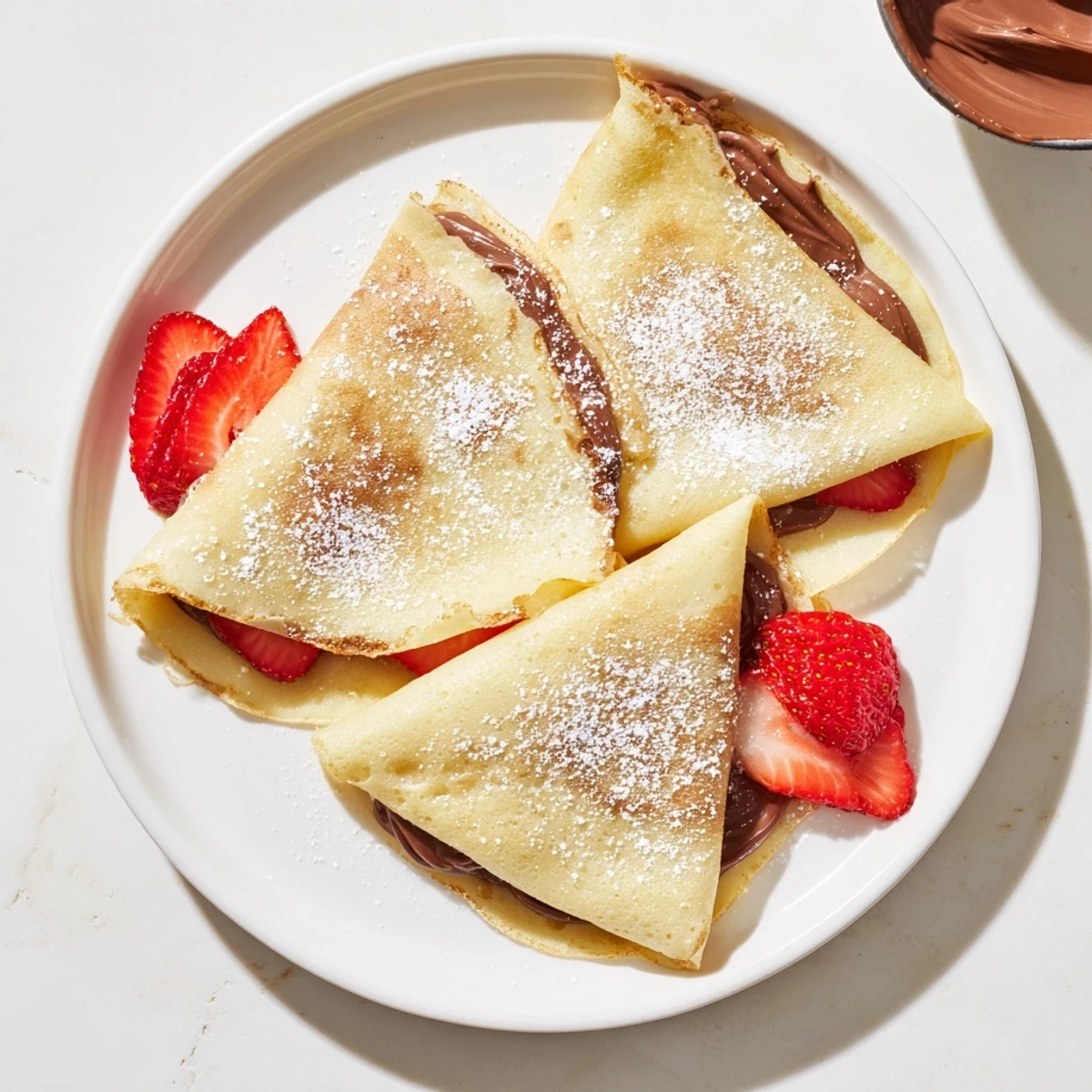
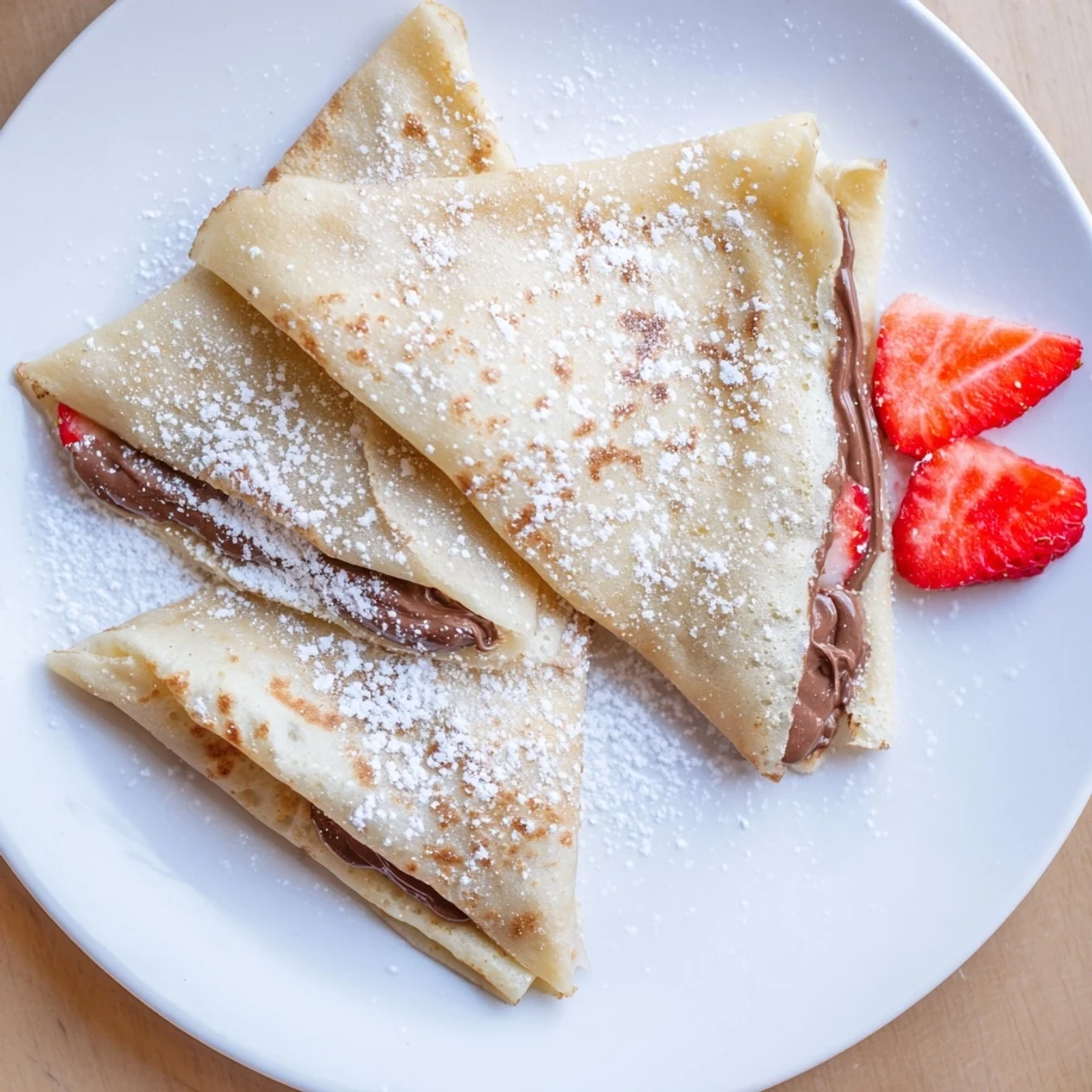
- Lay a crepe on a plate and spread 1 to 2 tablespoons of Nutella over one half, leaving a small border. The Nutella should be soft and spreadable—if it's cold, it'll tear your delicate crepe. Fold the crepe in half, then fold again into quarters, or roll it up like a log. Either way looks beautiful and tastes divine.
- The grand finish:
- Dust generously with powdered sugar using a fine mesh sieve. This isn't just garnish; it's the final note that makes people pause before taking a bite. Add fresh fruit, nuts, or a dollop of whipped cream if you're feeling generous. Serve warm, when the Nutella is still slightly melted and every element is at its best.
 Save
Save There's something deeply satisfying about mastering crepes. Once you've made that first perfect batch, you realize you've learned something your grandmother probably knew—that simple ingredients, a little technique, and a gentle hand can create something that tastes restaurant-quality and feels like an act of love. Every time I make them now, I feel a quiet pride knowing I can create this small, elegant moment of joy.
Choosing Your Nutella Wisely
Not all chocolate-hazelnut spreads are created equal. Classic Nutella has a specific taste profile—that hazelnut note that runs through the chocolate—but if you want to experiment, almond butter creates a more subtle, refined flavor, and fruit preserves (apricot or raspberry work beautifully) add brightness and tartness. I once substituted dark chocolate spread and added a pinch of cinnamon to the batter, and it transformed the entire dish into something almost sophisticated. The key is tasting as you spread and remembering that the filling is your chance to make this recipe entirely your own.
Timing and Temperature Secrets
Crepes are forgiving about timing but particular about temperature. The batter doesn't mind sitting for an hour if you cover it, and the crepes themselves stay warm and pliable for several minutes after cooking. What matters is your pan temperature staying consistent. If your first crepe is thin and perfect but your third is thick and heavy, your pan probably cooled down slightly. Keep an eye on that heat and adjust if needed. And here's a trick I discovered: if your crepes start sticking halfway through the batch, wipe your pan with a paper towel and re-butter it. Sometimes starch builds up from the batter, and a quick wipe fixes everything.
Making These Special
The beauty of crepes is that they're a blank canvas. I've made them for romantic dinners, casual breakfasts, and everything in between. One time, I whipped fresh cream with a touch of vanilla and a pinch of sea salt, and layered it with the Nutella for something that felt almost decadent. Another time, I sliced thin strawberries and arranged them decoratively on top before the powdered sugar. Simple additions, but they elevate the entire experience.
- Try adding a small splash of orange liqueur to the batter for subtle citrus notes that brighten the chocolate
- Serve with a dollop of lightly sweetened whipped cream or a tiny scoop of vanilla ice cream while the crepes are still warm—the contrast is magical
- Make the batter the night before and let it rest in the refrigerator; cold batter sometimes yields even thinner crepes, though room temperature works beautifully too
 Save
Save These crepes are proof that elegant food doesn't require hours in the kitchen or intimidating techniques. With a little patience and the right rhythm, you can create something beautiful and delicious that tastes like you've been making it forever. That's the real magic here.
Questions & Answers
- → What makes these crepes delicate and thin?
-
The batter uses a balanced mix of flour, eggs, and milk, whisked smooth and rested to ensure a thin, tender crepe when cooked.
- → Can I use alternative spreads instead of Nutella?
-
Yes, chocolate spreads, almond butter, or fruit preserves can substitute Nutella without altering the overall texture.
- → How do I prevent crepes from sticking to the pan?
-
Lightly brushing the nonstick skillet with melted butter before cooking each crepe helps create an easy release surface.
- → Are there any allergens in this preparation?
-
It contains wheat (gluten), eggs, milk, and tree nuts via the chocolate-hazelnut spread; alternative spreads may have different allergens.
- → What optional garnishes enhance these crepes?
-
Fresh sliced strawberries, bananas, or chopped hazelnuts add fresh taste and contrasting texture when served.