
 Save
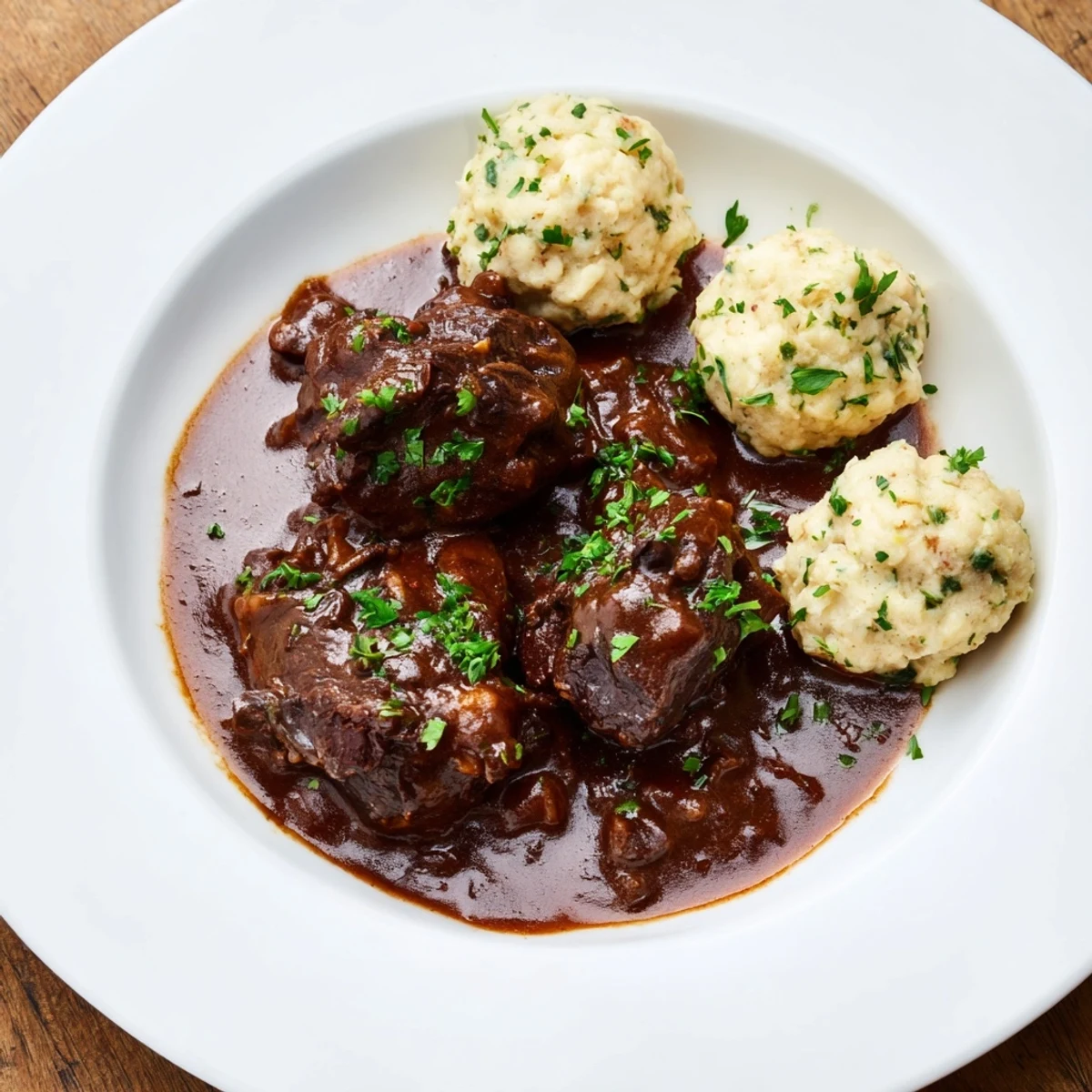
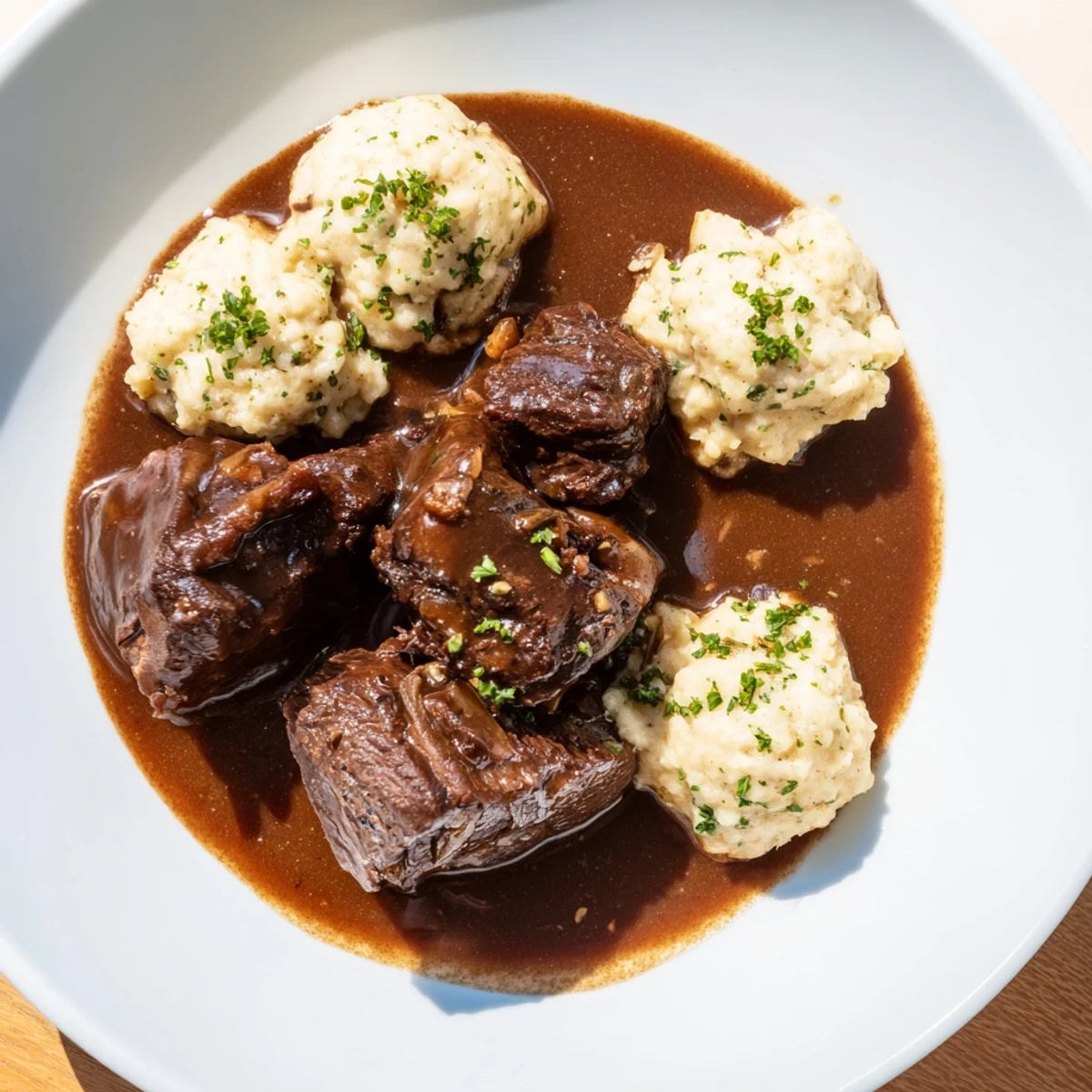
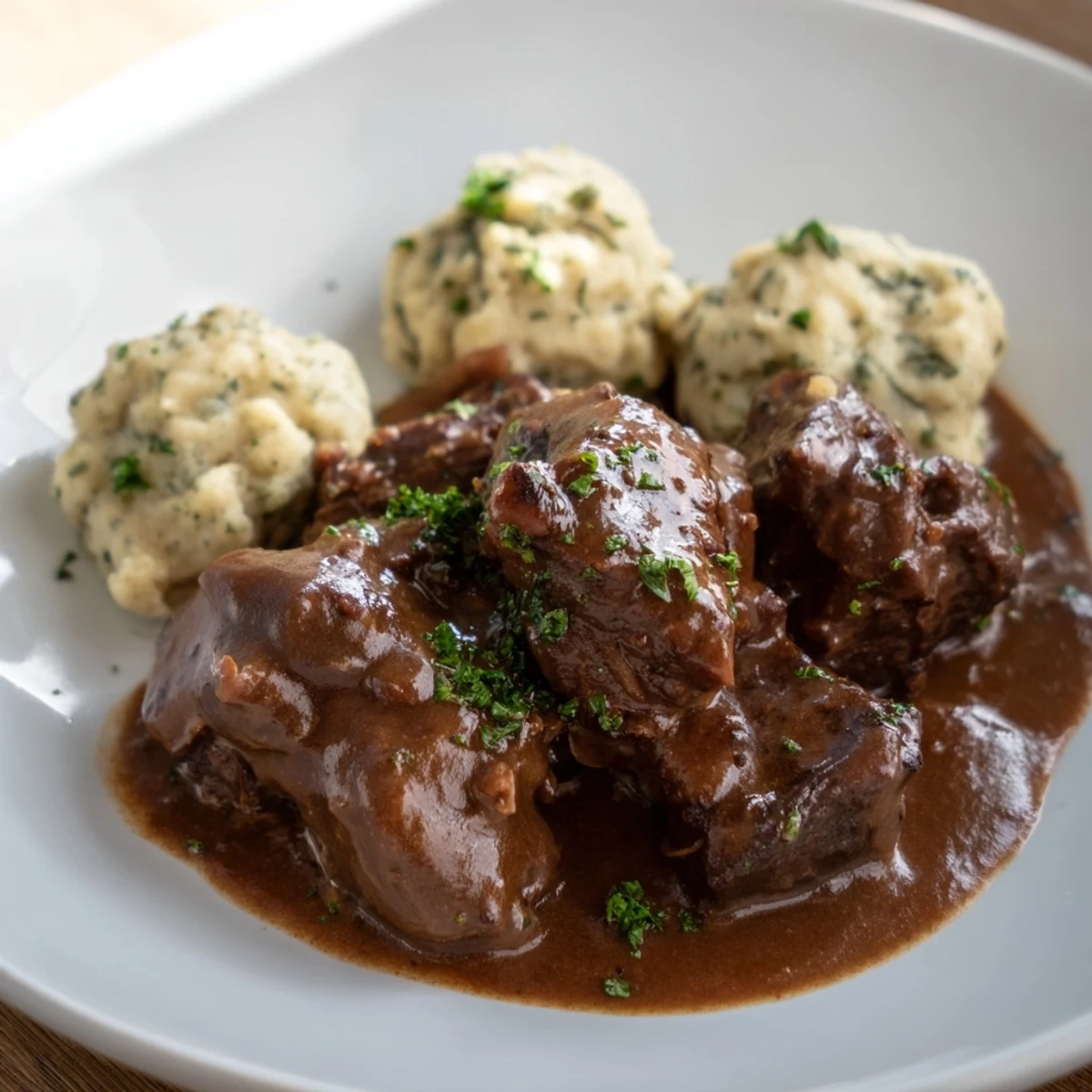
Save This dish features tender beef shin slow-cooked until melt-in-your-mouth soft in a rich, flavorful gravy enhanced with red wine, herbs, and aromatic vegetables. Fluffy herb dumplings made with fresh parsley and chives are gently cooked on top, adding a soft, fragrant accompaniment. The result is a comforting, hearty meal perfect for cooler days, combining robust meat flavors with delicate, herbaceous dough. Cooking low and slow ensures depth and tenderness in every bite.
I started making this on cold Sundays when the kitchen smelled like rain and the windows fogged up from the oven. The beef shin costs less than fancy cuts but gives you deeper flavor if you're patient. I learned that from a butcher who swore by slow cooking tough meat until it fell apart. Now it's the dish I make when I want the house to feel warm without much effort.
The first time I served this, I forgot to remove the thyme sprigs and my friend bit into one. We laughed so hard we nearly spilled the wine. Now I tie them with string so I remember to fish them out. That dinner turned into a tradition, same dish every February when we need something that sticks to your ribs.
Ingredients
- Beef shin: This cut has connective tissue that melts into the sauce during slow cooking, making the gravy thick and glossy without adding flour later.
- Plain flour: Coating the beef before browning helps build a crust and thickens the liquid as it braises.
- Vegetable oil: Use something neutral with a high smoke point so the beef gets a good sear without burning.
- Onions: Slice them thick so they soften but don't disappear, adding sweetness that balances the wine.
- Carrots and celery: These form the base of the braise and give the sauce body, plus they taste sweet after hours in the oven.
- Garlic: Chop it fine so it melts into the gravy and doesn't burn when you add it to the hot pan.
- Tomato paste: Cooking it for a couple of minutes takes away the tinny taste and adds a rich, savory depth.
- Beef stock: Use good quality stock or homemade if you have it, it makes a noticeable difference in the final flavor.
- Red wine: A cheap bottle works fine, just make sure it's something you'd drink, not cooking wine from a dusty shelf.
- Bay leaves and thyme: These give the braise an earthy, herbal backbone that smells incredible while it cooks.
- Black pepper and salt: Season generously, the beef needs it and the long cooking time mellows the salt.
- Self-raising flour: This is what makes the dumplings rise and turn fluffy without adding baking powder separately.
- Cold unsalted butter: Keep it cold and dice it small so it rubs into the flour easily and creates light, tender dumplings.
- Fresh parsley and chives: Chop them just before mixing so they stay bright green and fragrant in the dough.
- Cold water: Add it slowly, you might not need all of it, stop when the dough just comes together.
Instructions
- Preheat and prep the beef:
- Turn the oven to 160°C and toss the beef chunks in flour, shaking off the excess so they're lightly coated. This helps them brown evenly and thickens the gravy as it cooks.
- Brown the beef:
- Heat oil in a heavy casserole until it shimmers, then brown the beef in batches without crowding the pan. You want a deep golden crust, so don't rush this step.
- Cook the vegetables:
- Add onions, carrots, and celery to the same pot and let them soften for five minutes, scraping up the browned bits from the bottom. Stir in garlic for a minute, then tomato paste for two more until it darkens slightly.
- Build the braise:
- Return the beef to the pot and pour in stock and wine, stirring to combine. Tuck in bay leaves and thyme, season with pepper and salt, then bring it to a gentle simmer.
- Slow cook in the oven:
- Cover the pot with a lid and slide it into the oven for two hours. The beef should become tender and the sauce should reduce and thicken.
- Make the dumpling dough:
- While the beef cooks, rub cold butter into flour until it looks like breadcrumbs. Stir in parsley, chives, and salt, then add water gradually until a soft dough forms.
- Shape the dumplings:
- Divide the dough into eight pieces and roll them into balls with lightly floured hands. They don't need to be perfect, rustic looks better anyway.
- Add dumplings and finish:
- After two hours, pull the casserole out and place dumplings on top of the stew, spacing them evenly. Cover and return to the oven for thirty minutes until they puff up and cook through.
- Serve hot:
- Remove bay leaves and thyme sprigs before serving. Spoon the beef and gravy into bowls with a dumpling or two on top.
 Save
Save One winter I made this for a neighbor who'd just had surgery and couldn't cook. She said it reminded her of her mother's kitchen, even though our recipes were probably different. That's when I realized this kind of food doesn't need to be fancy, it just needs to feel like someone cared enough to let it simmer.
Getting the Best Texture
The beef shin has a lot of connective tissue, which is exactly what you want. It breaks down into gelatin during the long braise and makes the sauce silky. If you try to rush it at a higher temperature, the meat will toughen instead of melting. Low and slow is the only way this works.
Wine and Stock Balance
The red wine adds acidity and depth, but if you pour in too much the sauce can taste sharp. I stick to the ratio in the recipe and let the oven time mellow it out. If you don't drink wine or don't want to buy a bottle, just use extra beef stock and add a splash of Worcestershire sauce for complexity.
Dumpling Variations and Timing
You can swap parsley and chives for rosemary or tarragon, just keep the total amount the same so the dough doesn't get too wet. I've tried adding grated cheese to the dough and it works beautifully if you like that richness. The thirty-minute dumpling cook time is enough to steam them through without drying out the stew underneath.
- If your dumplings brown too much on top, cover the pot with foil under the lid for the last ten minutes.
- Leftover dumplings can be reheated gently in the microwave, but they're best fresh from the oven.
- Serve this with steamed greens or mashed potatoes if you want to make it even more filling.
 Save
Save This dish never fails to make the kitchen smell like comfort, and it's one of those recipes that gets better the more you make it. Serve it hot, let everyone help themselves, and don't forget to remove those thyme sprigs.
Questions & Answers
- → How do I ensure the beef shin becomes tender?
-
Slow cooking at a low temperature for at least two hours allows the tough connective tissue to break down, resulting in tender, flavorful beef.
- → Can I substitute red wine in the cooking liquid?
-
Yes, you can replace red wine with additional beef stock or a non-alcoholic alternative without compromising the dish's richness.
- → What herbs work best in the dumplings?
-
Fresh parsley and chives add a bright, fresh flavor, though rosemary or tarragon can be used for a more aromatic twist.
- → How do I achieve fluffy dumplings?
-
Mix butter into the flour until breadcrumb-like, add herbs, and gently combine with cold water to form a soft dough before careful baking on top of the stew.
- → Can this dish be prepared ahead of time?
-
Yes, it can be braised earlier and gently reheated before adding dumplings, which should be added shortly before serving for best texture.