
 Save
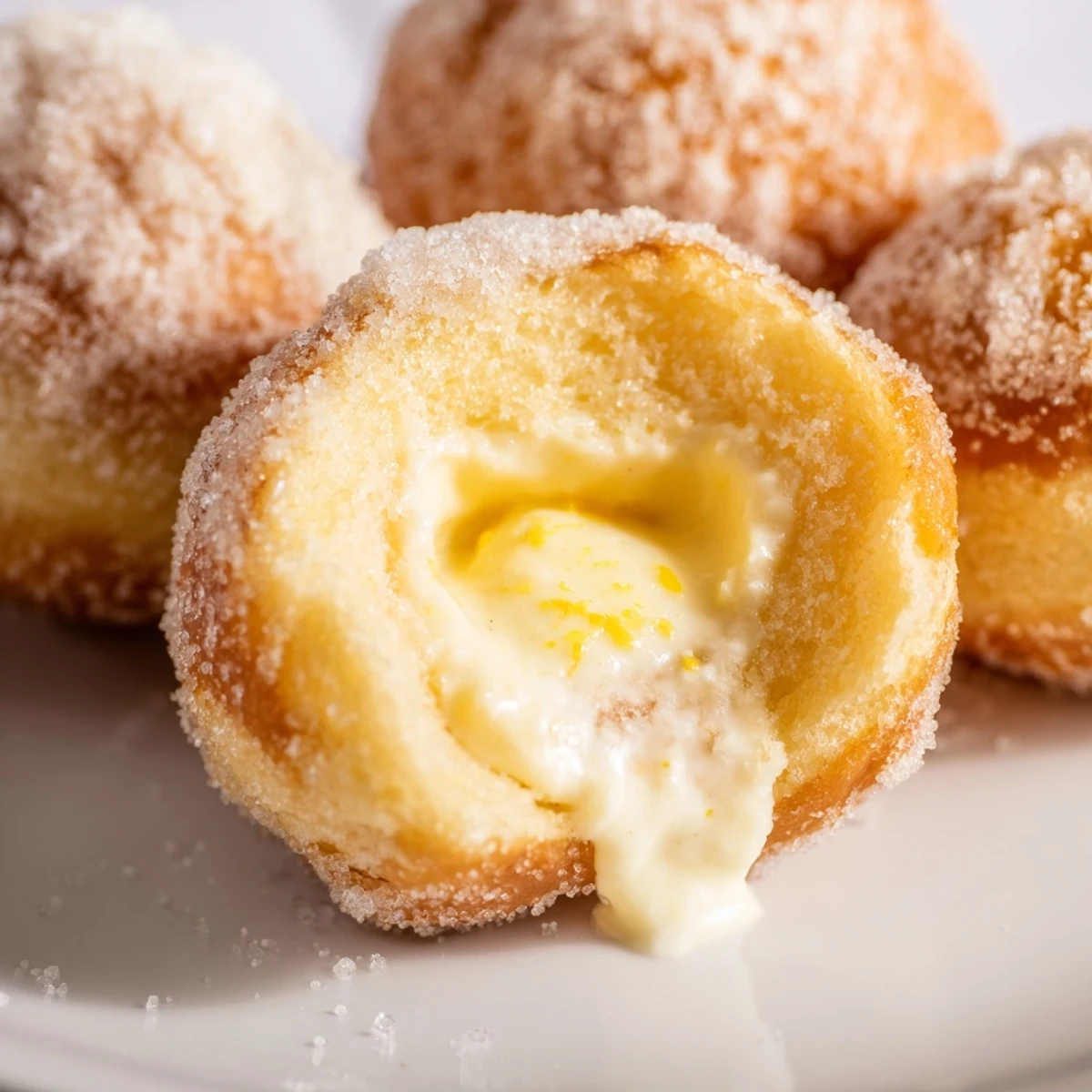
Save These classic Italian bomboloni feature pillowy-soft fried dough generously filled with silky vanilla pastry cream. The dough requires minimal kneading and rises beautifully for an airy texture, while the homemade cream filling delivers rich vanilla flavor with hints of fresh lemon. Best enjoyed warm rolled in sugar, they pair perfectly with morning espresso or afternoon cappuccino.
The first time I bit into a bombolone in a tiny Florence café, I actually stopped mid-chew and looked at my husband with widened eyes. The dough was impossibly light, practically collapsing into sweetness, and that cream—cool and vanilla-scented against the warm, sugar-dusted exterior. We went back three times that week, and by the time we left Italy, I had decided this wasn't just a doughnut. It was a life mission.
Last December, I made these for our annual cookie exchange instead of cookies, and honestly, my friends haven't stopped asking about them since. One friend's teenage daughter, who claims she doesn't like desserts, ate four in one sitting and then hovered near the kitchen counter until I packed up the remaining ones for her. There's something universally comforting about warm fried dough, but this version elevates it into something almost elegant.
Ingredients
- 500 g all-purpose flour: Italian flour creates a finer crumb, but good quality American flour works perfectly
- 60 g granulated sugar: This modest amount keeps the dough balanced so the pastry cream shines
- 7 g instant dry yeast: One packet is exactly right, no measuring needed
- 200 ml whole milk: Warm it gently to body temperature—too hot kills the yeast, too cold slows everything down
- 60 g unsalted butter: Softened to room temperature so it incorporates evenly into the dough
- 2 large eggs: These provide structure and richness that creates that pillowy texture
- 1 tsp vanilla extract: Use pure extract, not imitation—the difference is noticeable
- 1/2 tsp salt: Essential for balancing sweetness and enhancing all flavors
- Zest of 1 lemon: Grate it carefully, avoiding the bitter white pith underneath
- 500 ml whole milk for cream: Full fat is non-negotiable here—it makes all the difference in texture
- 4 large egg yolks: Save the whites for another use, or make a quick meringue
- 100 g granulated sugar: This creates the proper sweetness for the filling
- 40 g cornstarch: The thickening power that transforms milk into silky cream
- 1 tsp vanilla extract: This is the star flavor, so don't be shy with it
- Zest of 1/2 lemon: Brightens the cream and cuts through the richness
- 30 g unsalted butter: Whisked in at the end for an incredibly smooth finish
- Vegetable oil: You need enough for deep frying—about 3 inches in your pan
- 100 g granulated sugar for coating: Roll them while still warm so it sticks perfectly
Instructions
- Make the pastry cream first:
- The cream needs several hours to chill completely, so start here and let it cool while you prepare the dough. Heat 500ml milk with half a lemon's zest until tiny bubbles form around the edges. In a separate bowl, whisk 4 egg yolks with 100g sugar until pale and slightly thickened, then whisk in 40g cornstarch until smooth. Slowly pour about one-third of the hot milk into the yolks, whisking constantly to prevent scrambling, then return everything to the saucepan.
- Cook the cream base:
- Cook over medium heat, stirring constantly with a heat-proof spatula or wooden spoon. The mixture will suddenly thicken—this takes about 2 to 3 minutes. Once it coats the back of a spoon and bubbles gently for 30 seconds, remove from heat immediately.
- Finish and chill the cream:
- Stir in 1 tsp vanilla extract and 30g butter until melted and smooth. Press plastic wrap directly onto the surface to prevent a skin from forming, then refrigerate for at least 2 hours or until completely cold.
- Prepare the dough base:
- In a large bowl, combine 500g flour, 60g sugar, the instant yeast, and salt. In another bowl, whisk together the lukewarm 200ml milk, 2 eggs, 1 tsp vanilla, and zest of 1 lemon.
- Bring it all together:
- Pour the wet ingredients into the dry and mix until shaggy. Add the softened 60g butter and knead—either by hand or with a dough hook—for 8 to 10 minutes. The dough should be smooth, slightly tacky, and pass the windowpane test.
- Let it rise:
- Cover the bowl with plastic wrap or a clean towel and place it in a warm, draft-free spot. Let rise for 1 to 1.5 hours until doubled in size.
- Shape the bomboloni:
- Punch down the risen dough gently and roll it out on a floured surface to 1.5 cm thickness. Use a 6 to 7 cm cutter to cut rounds. Place them on a baking sheet, cover, and let rise 30 to 40 minutes until puffy.
- Fry to golden perfection:
- Heat oil to 170°C—350°F. Fry bomboloni in batches, 2 to 3 minutes per side, until golden brown. Drain on paper towels.
- Sugar and fill:
- Roll warm bomboloni in sugar while still hot. Fill a piping bag with the chilled cream, poke a small hole in each bombolone, and pipe generously inside.
 Save
Save My sister-in-law, who grew up in Naples, took one bite of these at our last family gathering and got absolutely quiet. Then she looked at me and said this was exactly like the ones from the bakery near her childhood school, and suddenly we were both tearing up over doughnuts and espresso and the way food connects us to memories we didn't know we still held.
Perfect Frying Temperature
I fried three batches before I learned that oil temperature is everything—too cool and you get grease-soaked dough, too hot and you burn the outside before the inside cooks through. A simple kitchen thermometer costs about ten dollars and saves so much heartache. The sweet spot is 170°C, and I check it between every single batch now. Also, never crowd the pan—the oil temperature drops when you add cold dough, so frying just a few at a time keeps everything consistent.
Make Ahead Strategy
The pastry cream can be made up to two days ahead and kept tightly covered in the refrigerator. The dough can actually be mixed and left to rise slowly in the refrigerator overnight, which develops wonderful flavor depth. The morning you want to serve them, just let the dough come to room temperature for about an hour before rolling and cutting. This timing means you can serve warm, freshly fried bomboloni for breakfast without the 6 AM alarm clock.
Filling Like a Pro
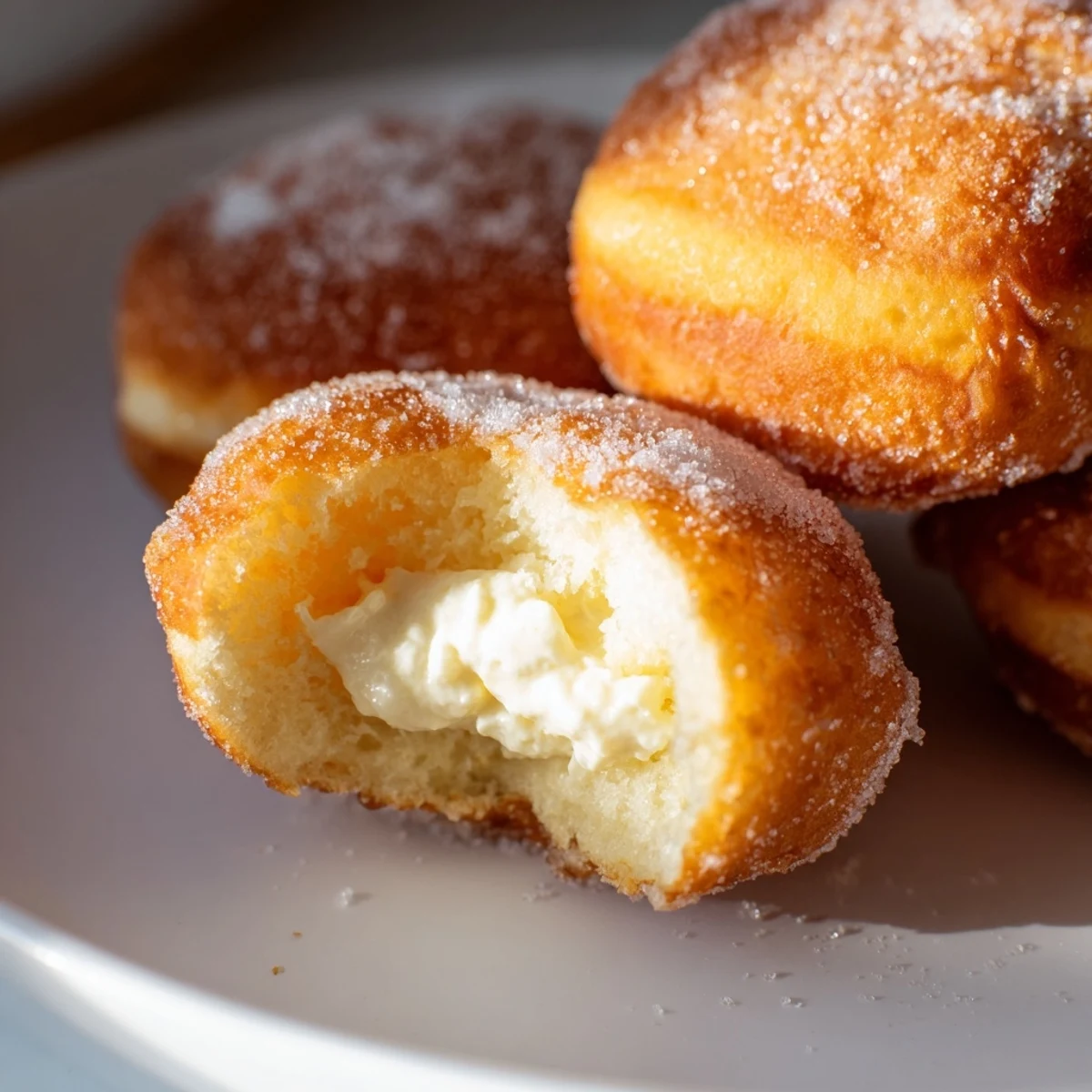
Getting the cream inside without making a mess took some practice, and I definitely ruined my first shirt learning this technique. The trick is a long, narrow piping tip that reaches deep into the center without creating a huge exit hole. Gently squeeze the bag while pulling the tip back slightly—you'll feel the bombolone grow heavier in your hand. Don't overfill, though—the first time I did this, cream literally squirted across the kitchen when I took my first bite.
- A chopstick can create the initial hole if your piping tip isn't quite long enough
- Warm bomboloni are easier to fill than room temperature ones—the dough is more yielding
- Any leftover cream is delicious on fresh berries or as a quick fruit tart filling
 Save
Save There's something almost defiantly joyful about making doughnuts from scratch, about standing at the stove watching simple flour and yeast transform into something that makes people's eyes light up. These aren't just dessert—they're a little celebration of Italian tradition and the universal comfort of warm, sweet things.
Questions & Answers
- → What makes bomboloni different from regular doughnuts?
-
Bomboloni are lighter and airier than American doughnuts, with a yeast-raised dough that creates a pillowy texture. They're always filled with cream, never glazed, and traditionally rolled in granulated sugar while warm.
- → Can I prepare the dough ahead of time?
-
Yes, the dough can be prepared and refrigerated overnight for its first rise. Bring to room temperature before shaping and proceed with the second rise. The pastry cream can also be made up to two days in advance.
- → What's the best way to fill bomboloni?
-
Use a piping bag fitted with a long, narrow nozzle (Bismarck tip). Poke the nozzle into the side or bottom of each cooled bombolone and gently squeeze until you feel slight resistance, indicating the cavity is filled.
- → Can I bake instead of fry?
-
While frying yields the authentic texture, you can bake at 190°C (375°F) for 12-15 minutes. Brush with melted butter before and after baking. The texture will be more bread-like than the classic fried version.
- → How do I know when the oil is at the right temperature?
-
Use a kitchen thermometer to maintain 170°C (340°F). Without one, drop a small piece of dough into the oil—if it sizzles gently and rises to the surface within seconds, the temperature is correct. If it browns too quickly, reduce heat.
- → Can I use different fillings?
-
Absolutely. Try Nutella, chocolate hazelnut spread, fruit jams, or pistachio cream. For chocolate pastry cream, add 50g melted dark chocolate to the warm cream before chilling.