
 Save
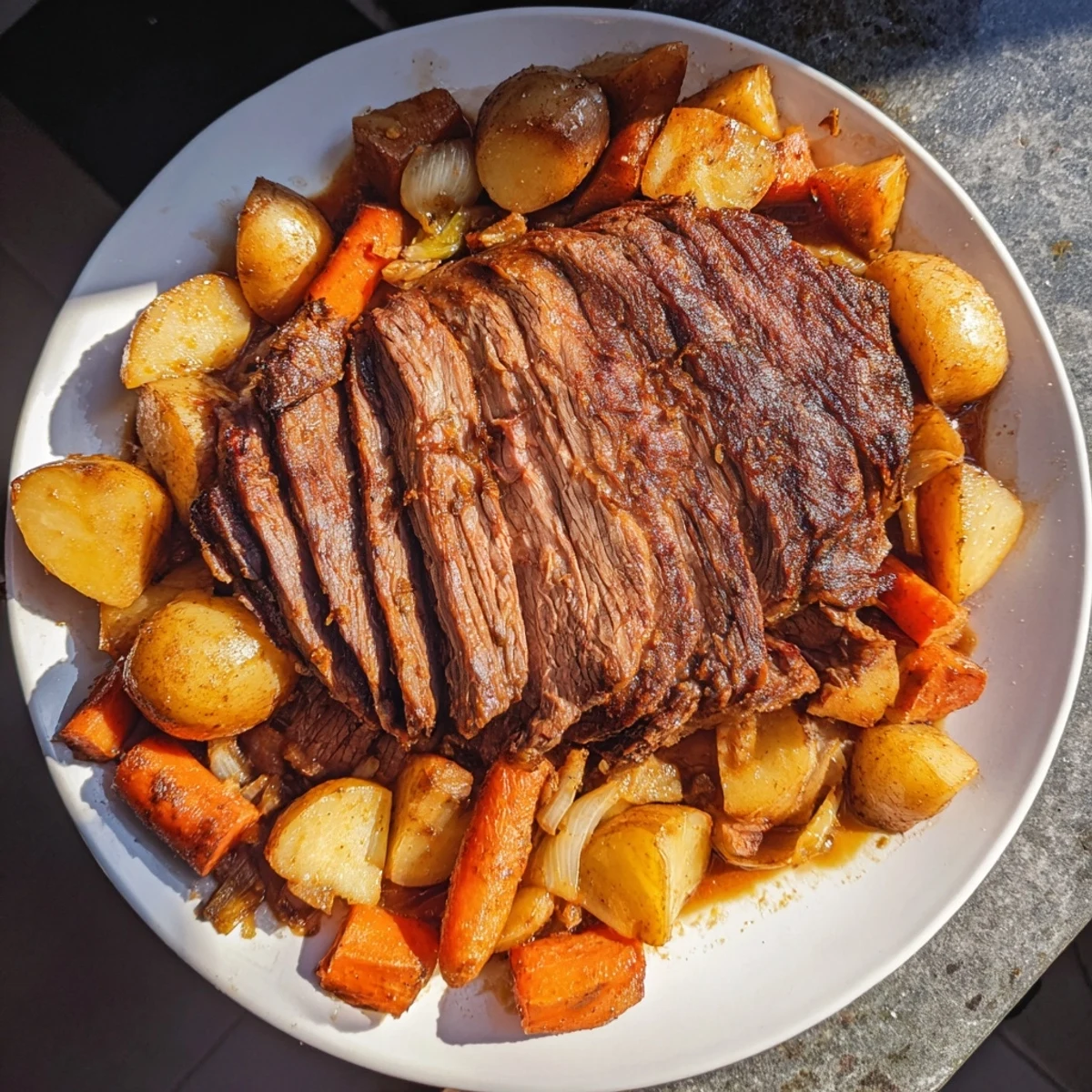
Save This beef chuck roast is seasoned and seared before slow roasting alongside hearty vegetables such as carrots, potatoes, onions, and celery. Aromatic herbs like rosemary, thyme, and bay leaves infuse rich flavors while red wine and tomato paste deepen the savory profile. The dish is cooked until meat is fork-tender and vegetables are perfectly soft, creating a comforting dish ideal for family gatherings or cozy dinners.
I still remember the first time I made this beef roast dinner—it was a Sunday afternoon when my grandmother called to ask if I could cook something special for the family gathering. She described her own version, the one that had fed our family for generations, and I decided to recreate it in my own kitchen. As the roast browned in the Dutch oven and those first savory aromas filled my apartment, I realized I was carrying forward something deeper than just a recipe. This dish has since become my answer to every question about comfort food, every request for something that tastes like home.
I'll never forget cooking this for my partner's family the first time we met—nervous doesn't begin to describe how I felt. But somewhere around the ninety-minute mark, when that kitchen filled with the aroma of beef and wine and herbs, I saw their faces relax. By the time we sat down to eat, I knew I'd made something that mattered. Now, whenever someone asks for my go-to dinner party recipe, this is the one I teach them first.
Ingredients
- Beef chuck roast, 1.5 kg (3.3 lbs): This cut has just enough marbling and connective tissue to become incredibly tender during the long braise—it's the workhorse of roasting and transforms into something luxurious with time and low heat
- Olive oil, 2 tbsp: Just enough to create that crucial golden crust that locks in the beef's flavor before everything braises together
- Salt and black pepper: Season generously—the beef needs to taste like itself before anything else happens to it
- Carrots, 4 large, cut into chunks: They soften into natural sweetness and create little pockets of texture throughout the pot; don't cut them too small or they'll disappear
- Potatoes, 4 medium, quartered: These become creamy on the outside and absorb every drop of braising liquid—they're as important as the beef itself
- Onions and celery: The flavor foundation; they soften completely and build the backbone of the sauce you'll spoon over everything
- Garlic, 4 cloves smashed: Smashing releases the oils and lets it mellow into the broth rather than shout at you from individual pieces
- Beef broth, 2 cups: Use good quality—this becomes your sauce, so it needs to be something you'd actually want to drink
- Dry red wine, 1 cup optional: If you use it, it adds depth and complexity; if you skip it, just use more broth and lose nothing essential
- Tomato paste, 2 tbsp: A small amount deepens the savory notes without making anything taste tomato-forward
- Fresh rosemary and thyme, fresh bay leaves: These herbs are where the magic lives—they perfume everything and remind you why fresh always beats dried
Instructions
- Prep your mise en place:
- Preheat your oven to 160°C (325°F). Cut everything before you start cooking—there's nothing worse than hunting for ingredients once you're in the middle of searing. Pat that roast completely dry with paper towels; moisture is the enemy of browning, and you want a proper golden crust on all sides.
- Season and sear the beef:
- Season the roast generously with salt and pepper on every surface you can reach. Get your Dutch oven hot with the olive oil over medium-high heat—you want it shimmering and almost smoking. Lay the roast down and let it sit; don't move it around. After 4–5 minutes, you'll hear a sizzle and see deep golden-brown color forming. That's your cue to flip. Do all six sides if you can, then set the beef aside on a clean plate.
- Build your flavor base:
- In the same pot with all those beautiful browned bits stuck to the bottom, add your onions, carrots, celery, and garlic. Let them cook for about 5 minutes, stirring occasionally, until they soften and start to pick up some color. This is where the foundation of your sauce is born.
- Deglaze and develop:
- Stir in the tomato paste and let it cook for just one minute—you're toasting it slightly to concentrate its flavor. Then pour in the red wine if you're using it, and use a wooden spoon to scrape up every single browned bit from the bottom of the pot. This is liquid gold, packed with flavor. Add your beef broth and stir everything together until it looks like an actual sauce.
- Braise low and slow:
- Nestle the seared roast back into the pot, then arrange the potato chunks around it like you're creating a little landscape. Tuck your rosemary sprigs, thyme sprigs, and bay leaves into the liquid so they infuse everything. Cover the pot with its lid and slide it into the oven. Now comes the hardest part—patience. For 2 hours, let the oven do the work. The beef will gradually become fork-tender, the vegetables will soften into creamy submission, and the whole kitchen will smell like a Michelin-starred restaurant.
- Rest and finish:
- When those 2 hours are up, carefully remove the pot from the oven. Fish out the herb sprigs and bay leaves with a slotted spoon and discard them. Let the roast rest for 10 minutes—this allows the meat to relax and stay juicy when you slice it. Then slice against the grain if you like, or simply pull it apart with two forks. Serve everything in wide bowls with generous spoonfuls of those rich pan juices.
 Save
Save There was one particular dinner when my best friend tasted this and actually got quiet for a moment—the kind of quiet that means food has transported you somewhere. She told me it tasted like love, like someone had put care into every step. I think she was right. There's something about a dish that takes time and attention that people can taste, and they remember it long after the meal ends.
The Thickened Sauce Secret
If you want a sauce that clings to the meat and vegetables rather than a brothier consistency, here's what I learned: once the roast and vegetables are done, remove them carefully to a warm serving platter. Pour the remaining liquid into a small saucepan and bring it to a gentle simmer on the stovetop. In a small bowl, whisk together 1 tbsp cornstarch with 2 tbsp cold water until completely smooth—any lumps will betray you. Whisking this slurry into the simmering liquid creates a glossy, restaurant-quality sauce that tastes like it took hours more effort than it did.
Wine Pairing and Serving
A full-bodied red wine like Cabernet Sauvignon or Côtes du Rhône is the obvious choice, but I've found that the wine doesn't just pair with dinner—it's actually part of the cooking. If you can't use wine in the cooking, don't worry; the beef broth alone creates deep flavor. For serving, I always make sure there's fresh bread nearby because those pan juices are too good not to soak up, and I serve everything in shallow bowls rather than plates—it keeps everything warm longer and catches every drop of that liquid gold.
Variations and Substitutions
This recipe is more forgiving than it first appears. Sweet potatoes create earthier sweetness instead of the neutral comfort of regular potatoes. Parsnips add a slightly spicy, vegetal note that's wonderful if you grow them or find them at a farmers market. Even root vegetables you might have forgotten about—turnips, rutabagas—soften beautifully in this braise. I once added mushrooms because that's what I had, and the umami they brought was unforgettable. The core technique stays the same: sear, build, braise, and wait for transformation.
- Try adding mushrooms (cremini, button, or a mix) for deeper, earthier flavor without changing anything else
- Parsnips and sweet potatoes both work beautifully alongside or instead of regular potatoes for different sweetness levels
- Fresh sage works just as well as rosemary if that's what grows in your garden or what you have on hand
 Save
Save This roast dinner has become the meal I turn to when life calls for something grounding and true. It's proof that the best food doesn't come from complexity—it comes from respecting your ingredients and giving them time to become what they're meant to be.
Questions & Answers
- → What cut of meat is best for this beef roast?
-
Beef chuck roast is preferred for its rich marbling and tenderness when slow-cooked.
- → Can I substitute the red wine in the cooking liquid?
-
Yes, you can replace red wine with additional beef broth if preferred or to keep the dish alcohol-free.
- → How can I thicken the sauce after cooking?
-
Remove the roast and vegetables, then simmer the pan juices and whisk in a cornstarch slurry until thickened.
- → What vegetables are used with the beef roast?
-
Carrots, potatoes, onions, celery, and garlic are combined to complement the meat and absorb flavorful juices.
- → Is this dish suitable for gluten-free diets?
-
Yes, by ensuring the beef broth and tomato paste are gluten-free, this dish fits a gluten-free diet.